Greetings from our little farm! The days are getting shorter and cooler! The hens are starting to molt and I even fired up the wood burner a few days ago. Winter certainly feels like it's coming and there is no shortage of things to do! Summer crops are harvested, new fall crops are already growing, food is getting canned and frozen, and our winter wood pile is nearly full. We are making good headway on clearing invasive buckthorn in preparation of our nut tree planting project. One new project before winter is to build a protective hut for my new heat pump furnace. We are open until mid-November, so if you would like to join us, I’ll send you my standard application form. After you've returned it, we can set up a Zoom or Facetime meeting to get to know each other. I look forward to haring from you!
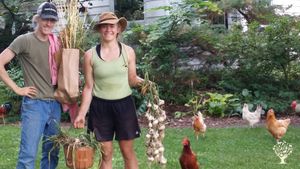
WHO & WHAT WE ARE Only 12 miles from downtown Madison, ours is a 6 acre homestead farm divided into woodland, a vegetable garden, a few fruit trees, cultivated and wild raspberry patches, and a field. We are continuing to clear invasive honeysuckle and buckthorn, planting hazelnuts, walnuts, chestnuts and pecans, as well as coniferous and deciduous forest trees. Originally our gardens accommodated our family's needs, but they have since grown to supply some of Madison's finest restaurants with our primary crop, raspberries, as well as fruits, vegetables and edible flowers. We practice organic methods although we are not certified organic. Last year we very successfully added hugelkulture to our farming practice. I am interested in maintaining natural ecosystems on my property, so we would fit into the category of restoration agriculture and also agriforestry. We added chickens to the mix after hatching chicks in my science class more than a few years ago. We have about 35 chickens that free-range on the property as my rambunctious border collie, Dakota, is learning to take over guard duty after my beloved farm and classroom dog, Darcy, passed. While I no longer teach, I (along with Dakota) continue to work after school 2-3 afternoons per week to either help students with their studies or explore the natural areas around our school.
BACKGROUND & PERSONAL PHILOSOPHY Here you will learn how to live as sustainably as possible by carefully managing resource usage, minimizing waste, and caring for the things we do have. I am first generation Dutch and learned many of these practices well before the term "sustainable"" was popularized! As a biologist, I have a more scientific understanding of why these old practices make both ecological, economical and just plain common sense. Now that I'm not teaching science anymore, I'm delving more deeply into the concepts and practices of managing a healthy ecosystem on my farm with an overall goal of increasing its biodiversity. I enjoy sharing my home with open-minded, free-thinking, energetic, and adventurous individuals who tend to be as sociable as I'd like to think I am. As a (now-former) teacher and a talker, I encourage and enjoy discourse - especially over a shared meal or by the bonfire. I also recognize and respect the importance of a person’s need for quiet and privacy, needing that myself as well. I enjoy learning from those who spend time here and do very much see this as an internship and cultural exchange. Our WWOOFers have come from near and very far. We speak English, "Spanglish", and some Dutch. Our first WWOOFer spoke French, but we figured it out before Google Translate even existed !
LEARNING WHILE YOU WORK Our interns learn how to live closer to the land and maintain and care for the land for future generations. I do take seriously WWOOF's mission to teach and share knowledge, so you need not be experienced. I only ask that you are willing to work and learn, and that you are reliable. Often times my interns teach me things as well! Depending on the season, you will learn how to plant, tend, harvest and preserve the raspberry and vegetable gardens. In March and April, we 'typically' make syrup, prune and transplant the berry plants and other perennials, clear invasive plants, harvest & split wood for next winter, and start seedlings indoors, but with climate change, this can start as early as February. May & early June we plant outdoors and then start various projects, mow lawn, weed & water, and, if there's time, work on the perennial gardens. Our June berries start ripening in June (of course??) and July is when we pick and deliver both wild and cultivated raspberries. Harvest of fruit trees begins in mid-August into the fall. Throughout the season, we are harvesting vegetables and edible flowers for ourselves and our clients. As the season progresses, we include food preservation (including canning), continuing invasive removal, and preparing for winter. Throughout the year, you'll help care for our very entertaining laying hens & roosters. And, yes, we do sometimes cull the roosters for meat. Unfortunately, just as I was leaving for vacation, a marauding fox arrived on my patio during broad daylight, so they are currently cooped up until I can figure out a solution. All these tasks require that you are physically fit and willing to work hard. Lastly, I love to forage for mushrooms (I belong to the local mushroom society) and other edible plants and do bring my WWOOFers along should they want to.
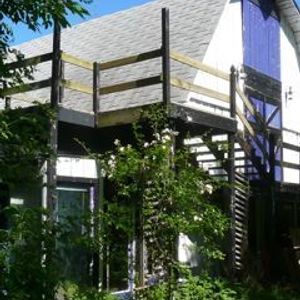
In addition to the seasonal activities, we will be working on various projects as time permits. This year we'll continue to clear invasive honeysuckle and hopefully plan out and build water retention swales and maybe even a pond. Every year we plant trees, including nut and evergreen trees. In fact, I was surprised by a gift 80 shagbark hickory tree seedlings specially bred for a larger nut size. My WWOOFers and I quickly dug them in, which illustrates how the best laid plans can not only be set awry by the weather, but by unexpected manna from heaven! The other big news is that I now have a tractor to help with the heavy work. Life gets pretty busy, but I have some building projects in mind that may or may not happen this year. My new neighbor tore out 14 huge dumpster-loads from his entire house and we have been the beneficiary of good lumber, windows and pavers, so perhaps we'll have time to build a greenhouse!! Originally built in 1895, the farmhouse is always in need of some repair and updating. I'm very excited that my WWOOFers and I finally finished installing a passive solar furnace and it's working beautifully. I also have to complete the rebuild on my foyer so it can become a mini-greenhouse. I'm always dreaming up new projects! And, in between it all, I'll be taking time to train Dakota. Bottom line-there's ALWAYS something to do and learn. Most importantly, you will learn how living closer to the land is physically challenging, but rewarding work.
WORK COMMITMENT/HOURS Our live-in internship requires that you commit no more than 25 hours per week. Local interns should expect to spend ~5 hours, and enjoy a nice meal with us. Hours are generally flexible until the raspberry harvest begins in late June/early July when we typically pick on MWF. Of course, weather (and Canadian smoke) conditions have something to say about when we work! My long-term WWOOFers have often also held part-time jobs, but during the harvest season, I ask that you are available in the mornings. I work very long hours, so in the summer and fall I'm usually working outdoors until dark, but that doesn't mean you have to! There is no shortage of fun things to do in the Madison area (many of which are free), including outdoor concerts, community dances and sing-alongs. We have bikes to explore the many bike paths, or kayaks and a paddle board to enjoy the nearby rivers and lakes. It's not unusual to host a bonfire potluck with both current and former WWOOFers. And, if you love board games, you've come to the right place!
Read more
Learning opportunities
Vegetable farming
Fruit or nut farming
Poultry farming
Forestry
Wild foraging
Seed saving or production
Meat processing
Vegetable or fruit preservation
Beer, cider, wine, or juice making
Mechanics / tools / technology
Methods or systems
No-till farming
Permaculture
Regenerative agriculture
Mentoring opportunities
Woman-operated
Host type
Production farm
2.4
Hectares
|
6
Acres