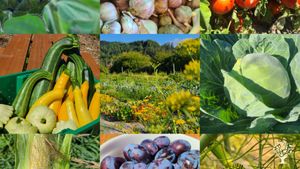
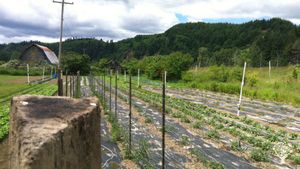
We live on a small island in the Columbia River. Our farm consists of 35 acres of silt loam. We have farmed the same land for over 35 years and have been all natural since 2003. We grow about 40 types of crops. We plant successively, starting in April through late August. We begin the season planting in greenhouses and under row covers and poly plastic. Our most profitable crops are tomatoes, beans, peppers, squash, and the U-pick pumpkin patch that we do in October. We have many types of plums and typically harvest them over six weeks. We grow fresh market produce and sell through a CSA program, farmers markets and 'On Farm' sales. Our goal is to provide healthy nutritious food for ourselves and those around us at affordable prices. We are continually trying to extend our growing season by getting our produce to ripen earlier and to lengthen the season into the fall. We prefer to host volunteers for at least three weeks but we are open to shorter stays as well. We appreciate all the help we can get! You could stay as long as the whole season. The time of year that we need help the most is from April to the end of October, though we do have work to do year round. We love working with people who are especially interested in learning all of the ins and outs of farming, in particular, those who think they may be interested in farming or gardening on their own later in life. Jobs throughout the year include harvesting produce, weeding, hoeing, watering, repairing fencing, blackberry removal, vehicle and farm maintenance, pruning trees, propagation, creating flower bouquets, helping at markets and with CSA's, talking with customers, greenhouse maintenance and ditch cleaning. Work on any farm is hard work and labor intensive. We try to split up hard tasks when we can and try to do indoor tasks when its raining outside however that is not always possible and we do end up working in the rain.
The growing season runs from April through October. Mothers day baskets follow our first greens of the season. We like to start taking WWOOFers in March when we begin working the land and work on the seedlings, prior to planting. We can take WWOOFers for shorter times during Christmas holiday and spring break for those that can’t get away for a longer time. We are expecting WWOOFers to work beside us on our produce farm for 5 to 6 hours a day, 5 days a week. We will teach them what we know about whatever the job is at the time and happily answer any questions that might come up. Transportation can usually be arranged to/from the Portland airport, Longview/Kelso train or bus station. In addition to the vehicles, we have a canoe as we live right beside the Columbia River, with small islands to explore. We are 3 miles from a 60 acre park with a small beach on the Columbia river. Nearby there are lots of places to hike and bike. Our goal is to get work out of the way in the morning, starting at either 7, 8, or 9 am depending on the day so that WWOOFers have lots of time in the afternoons to go explore creeks, mountains, ape caves, see waterfalls, etc.
Our housing is a small, 2 story home that will easily house 1-5 people. It is only 1 bedroom but we have had a lot of volunteers modify the living room and another extra room by moving mattresses around etc. The mattresses are newer and well kept. It has a refrigerator, microwave, stove, oven, air conditioning, and heaters. WWOOFers can cook their own food and sometimes we can have meals together. It also has a bathroom and shower(no bathtub), with laundry facilities on site. There are often Non-farming opportunities, such as building construction available.
Special diets such as vegan, vegetarian, or pescatarian can easily be accommodated as we mostly eat organic produce that we have grown anyway. We can host children, but not pets as we have a lot of animals, which would cause conflict. English is the only language spoken, but we can usually understand what others mean even if they don't speak much English. We don't allow smoking, vaping, drugs or drinking alcohol.
We have developed tomato varieties and one pumpkin variety. We save many of our own seeds such as tomato, broccoli, lettuce, squash, pumpkin, chard, and celery. My daughter works at Lower Columbia School Gardens where she teaches organic growing, food prep and coordinates volunteers for the school gardens at 20 different schools. I believe her abilities are largely due to our teachings. We sometimes have up to 5 WWOOFers at a time but this year we are really hoping to have 3 awesome people at a time for the duration of the season. We try to profile the guests for compatibility for ease of living situations. We like to share meal duties and eat community meals, where we can discuss the day and go over what we have learned, and what the plans are for the following day. We grow flowers for the bees, native and Honeybees. Please come join us with your desire to learn!
We are very strict about no smoking as Tobacco mosaics virus is a disease that can kill our peppers, tomatoes, eggplant, potatoes and sweet potatoes and leave our farmland non- usable.
Thank you for finding us and reading our profile
Certifications: I was certified organic for 13 years. I do everything exactly the same except no paperwork.
Internet access available
Read more
Learning opportunities
Vegetable farming
Fruit or nut farming
Cattle farming
Flower farming
Seed saving or production
Vegetable or fruit preservation
Bakery
Food justice / sovereignty
Methods or systems
Biological pest control
Permaculture
Rotational grazing
Mentoring opportunities
Woman-operated
Host type
Production farm
14.2
Hectares
|
35
Acres
Accommodation