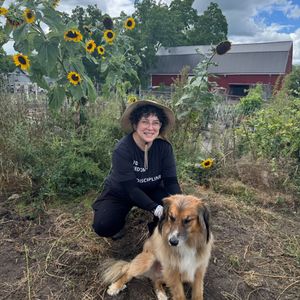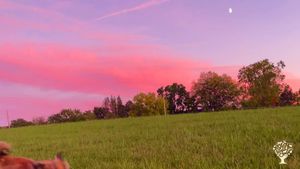

We are homesteading on a beautiful 60-acre farm between Lake Ontario and the Finger Lakes region of Western New York. We have 40 acres of meadow bordered by a small wooded stream valley. The farm is located on traditional Seneca lands and the current farmhouse and barn were built in the 1800s.
We have completed a farming season of spring, summer, and fall with WWOOF volunteers and it's been a fantastic experience! We've enjoyed having people from around the country (and the world!) join us and we have really enjoyed their company. Plus our gardens and harvest have been improved thanks to their help. It's also been really fun sharing food from the farm with appreciative (and hungry) people. And it's been lovely experiencing people enjoying the beauty of the land and sky here.
We have a large vegetable garden, a Three Sisters garden, and many flower beds. Our poultry include laying hens, meat chickens, and occasionally other poultry such as turkeys, ducks, or geese. We have a small flock of sheep. Some of our ewes are on the older side and have given us lambs for many years, so we have found a fantastic home for our ram to give the ladies a rest in their final years. We are still shearing and usually have a backlog of wool to work with. We also have a goat, a donkey, a Haflinger horse, an English Shepherd/farm collie, and two cats.
We produce our own maple syrup and are dreaming of re-stocking our beehives. The fruit-bearing trees that came with the farm are in decline, so we have started a new orchard. This year it will be complete with pears, apricots, apples, peaches, plums, nectarines, and cherries. The land includes wild (or gone wild) hickory, cherry, and pear trees. We are working to be self-sustaining with food, but are not there yet. Our farm is a good place to experience farm-to-table food. Overall we are working to recreate many of the ways the farm originally functioned, without the stress of making a living from the land. We are working to maintain a healthy meadow for both wildlife and hay, and preserving woodlands for trees and wildlife.
Projects that WWOOFers could take part in really vary season to season, but they all involve figuring out ways to make the farm an organic whole (pardon the pun). In the past week, we had to figure out to keep weasels out of a previously predator-proof chicken house, schedule shearing for the sheep, use old fence posts and stones to raise a garden bed, move seedlings outdoors, weed, move compost around, clear out stalls, etc.
In spring a lot of our work is preparing garden beds, as well as seasonal animal care. Planting season runs from late March to early June, with a second planting midsummer. Harvesting and keeping the harvest comes in waves, with long stretches of happy dinner picking from the garden.
Other projects involve ways to maintain or move fencing for animals, working on smaller animal structures, etc.
As fall approaches we work to harvest vegetables from the garden and get them into the freezer in various forms. For example, we have a Beet Bonanza this year, so making and freezing borscht soup is on our agenda. For tomatoes we need to dice some to go into the freezer and slice the other half to go in the dehydrator. Peppers, berries, turnips, greens, squash...all of these need to be preserved one way or another.
Along with the harvest comes garden clean up, as well as barn clean up. Twice a year we have about 15 meat chickens to get into the freezer as well, and this year we are raising turkeys too. (Of course, this work is only for people who want to learn this part of homesteading.)
Here are some tasks on our farm, organized by season.
Winter
Sugaring: tapping trees, gathering sap, boiling, enjoying maple syrup!
Sheep: prepping the lambing jugs, helping with lambing, bottle feeding lambs if necessary.
Spring
Gardens: Soil prep. Early planting. Seedlings. Weeding, weeding, weeding. Sheep: shearing, prepping wool for use, hoof trimming, moving electric fences, cleaning out the lambing pen. Poultry: Chicks. Chick cage cleaning and prep. Predator proofing.
Summer
Gardens: Early harvest. Putting up. Eating. Midsummer planting. Weeding.
Poultry: Slaughtering meat birds, plucking, prepping, wrapping.
Sheep: Putting up hay for winter.
Fall
Gardens: Harvest, harvest, harvest. Putting up food by freezing, drying, cooking. Prep for four season gardening.
Sheep: Lambs to market or freezer.
Animal care is, of course, year round.
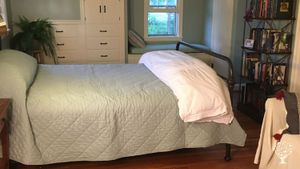
We have a lovely old farm house that we have almost completely beautified. We have 2-3 guest bedrooms and will feed WWOOFies with our family for dinner and give folks access to our kitchen to make food for breakfast and lunch. When our farm is filled with family from out of town, we may not be available to host.
Learning opportunities
Vegetable farming
Fruit or nut farming
Poultry farming
Sheep or goat farming
Raising of other farm animals
Meat processing
Vegetable or fruit preservation
Methods or systems
Biological pest control
Regenerative agriculture
Host type
Self-sufficiency property
24.3
Hectares
|
60
Acres